
Advisory Council Issues New Open Meetings Opinion
"The practical standard for meetings being held in person therefore is that the notice must identify the location where the meeting is held with sufficient information for the public to attend..."
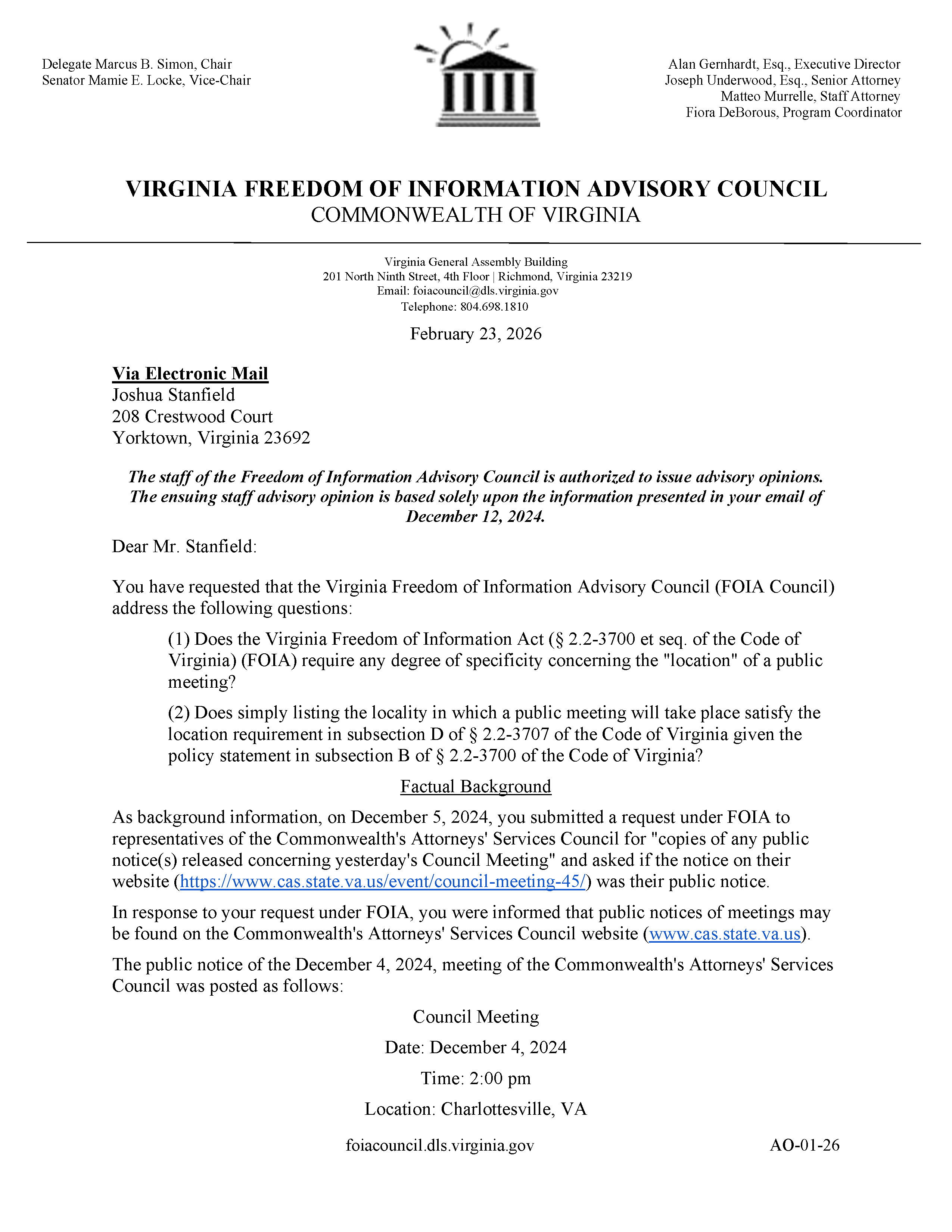
In December of 2024, as I wrote in one of my first articles on this platform, I submitted a request for a formal opinion from the Virginia Freedom of Information Advisory Council on our open meetings law. My questions concerned how specific the location needs to be on the formal notice of any given public meeting.
The origin of my inquiry:
The Commonwealth’s Attorneys’ Service Council was set to meet on December 4, 2024, and citizens interested in attending the meeting were informed by the Council’s website that the meeting was taking place in "Charlottesville.” But Charlottesville comprises over 10 square miles of land, and if a citizen wished to attend the meeting, how would they know where to go?
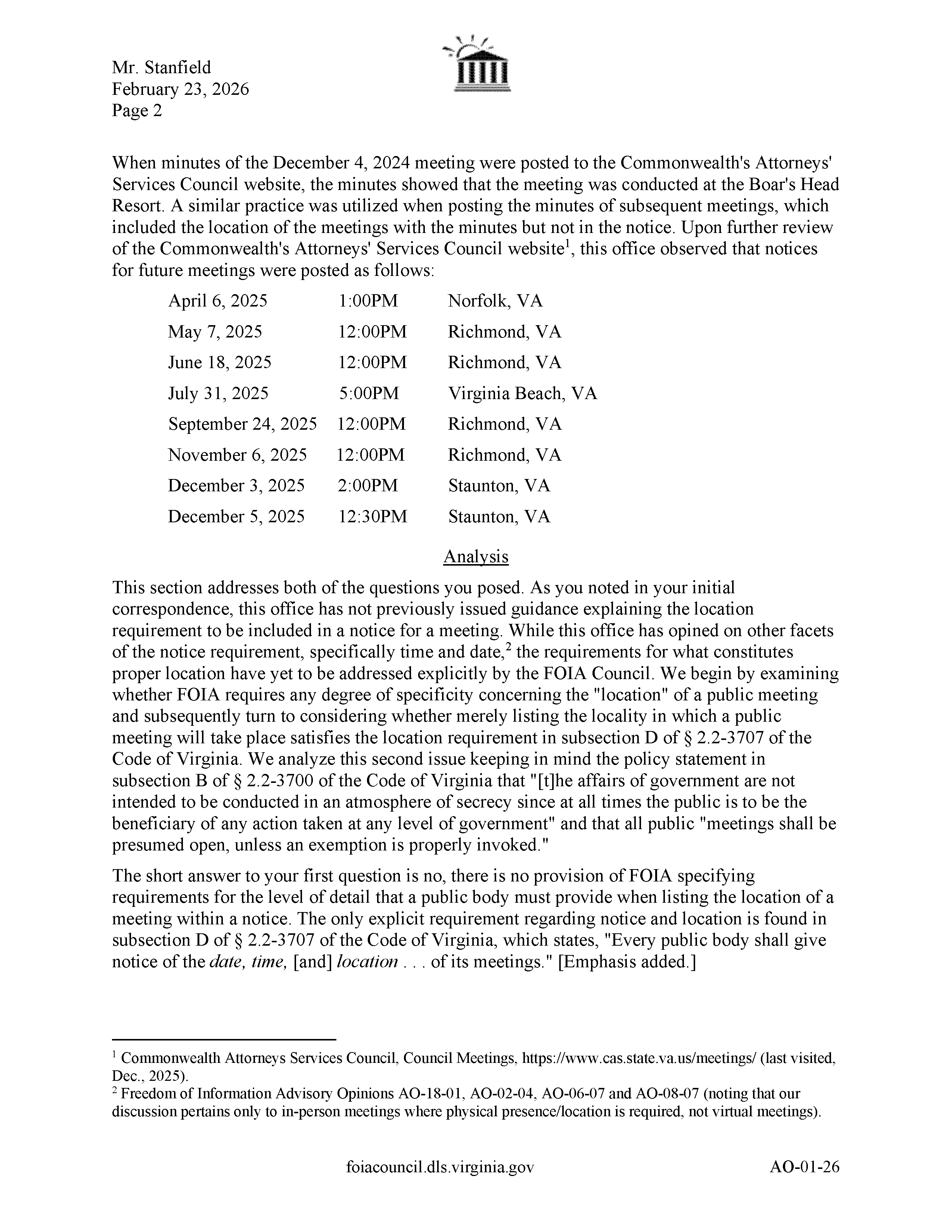
The Commonwealth’s Attorneys’ Service Council website, in multiple locations, provides notice of future meetings, but they list the location as simply a locality. You can find out where the meetings took place, after the fact, by reading the minutes on the website (the December 4 meeting was apparently at the Boar’s Head Resort).

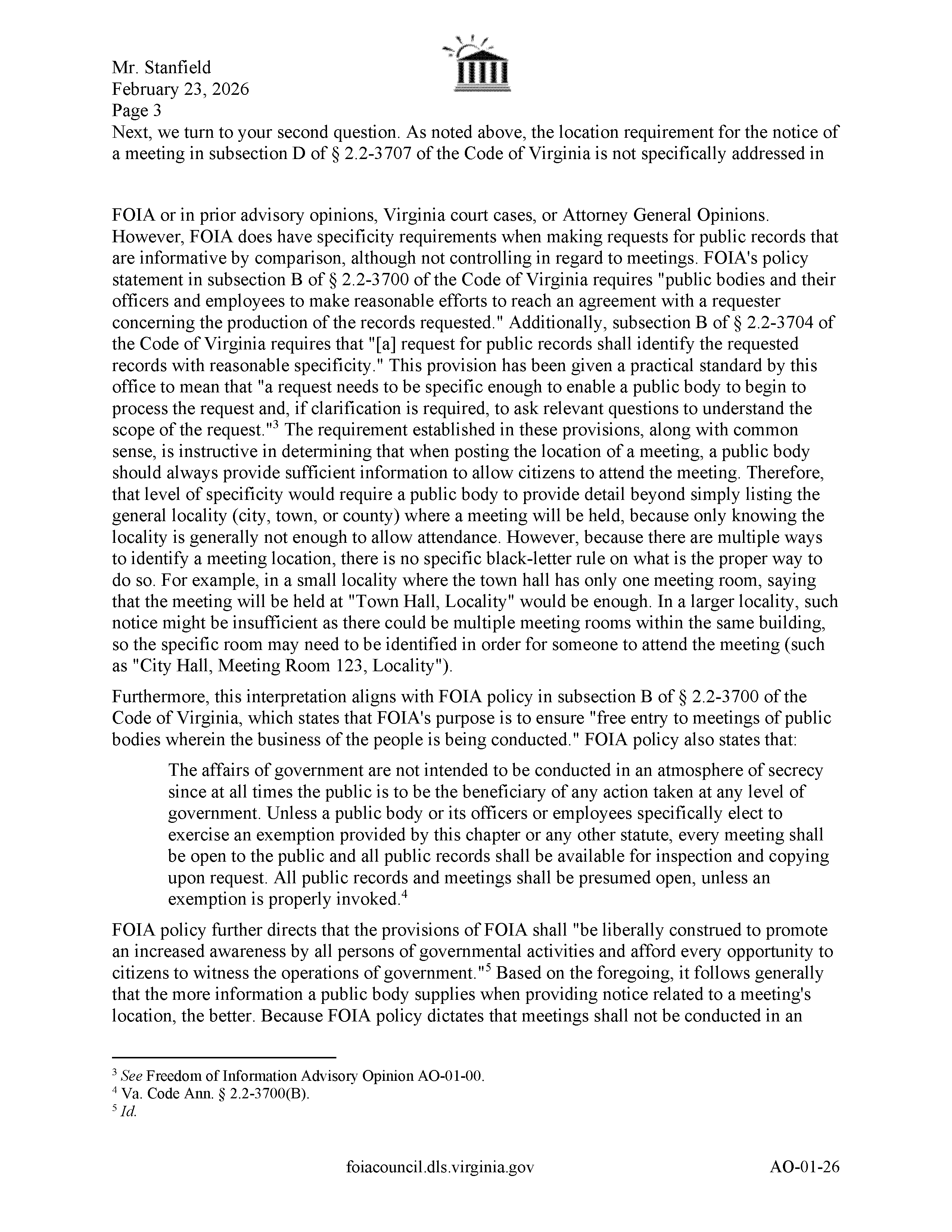
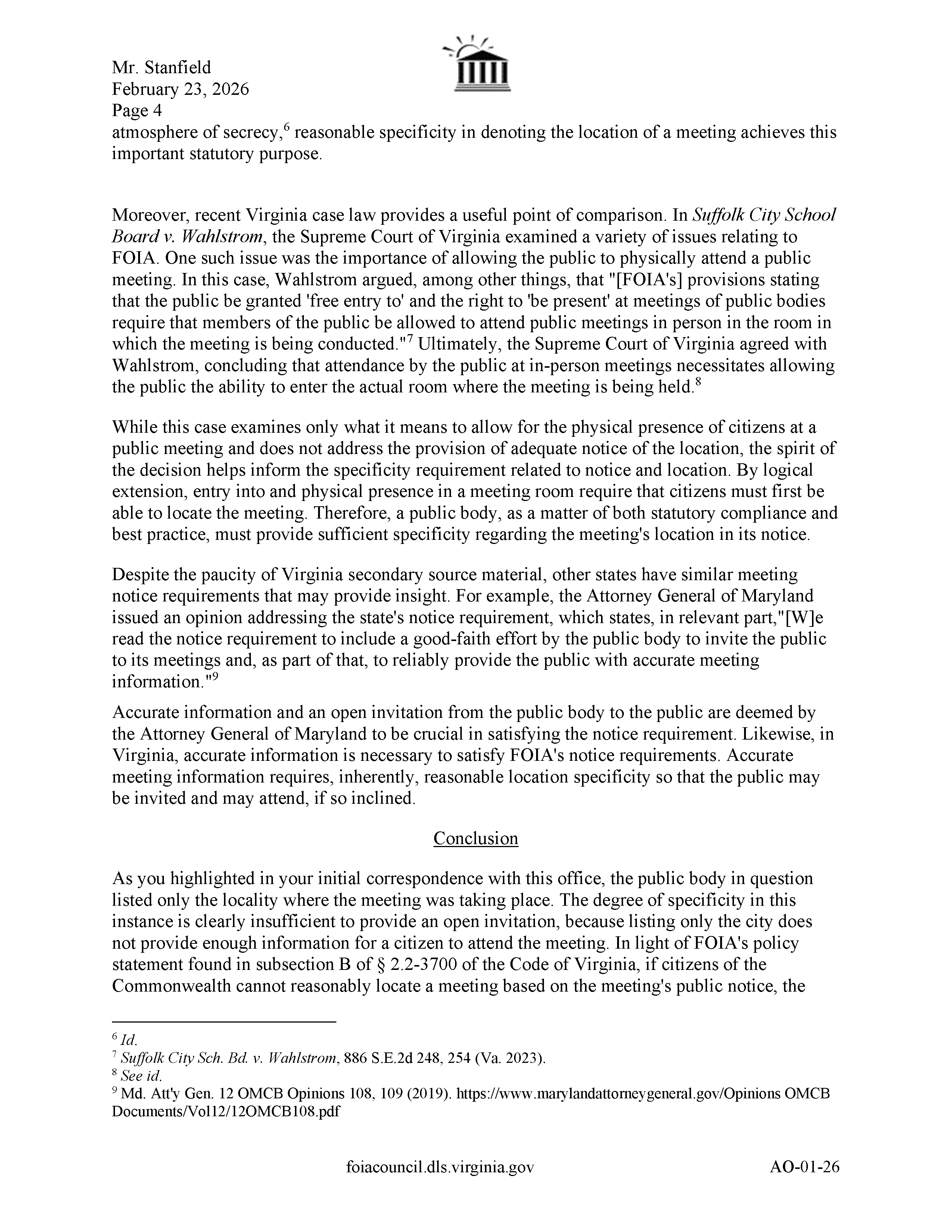
Now, over a year after I submitted my request for a formal opinion, the Freedom of Information Advisory Council has issued one. You can download or read the entire opinion below, but here’s their conclusion:
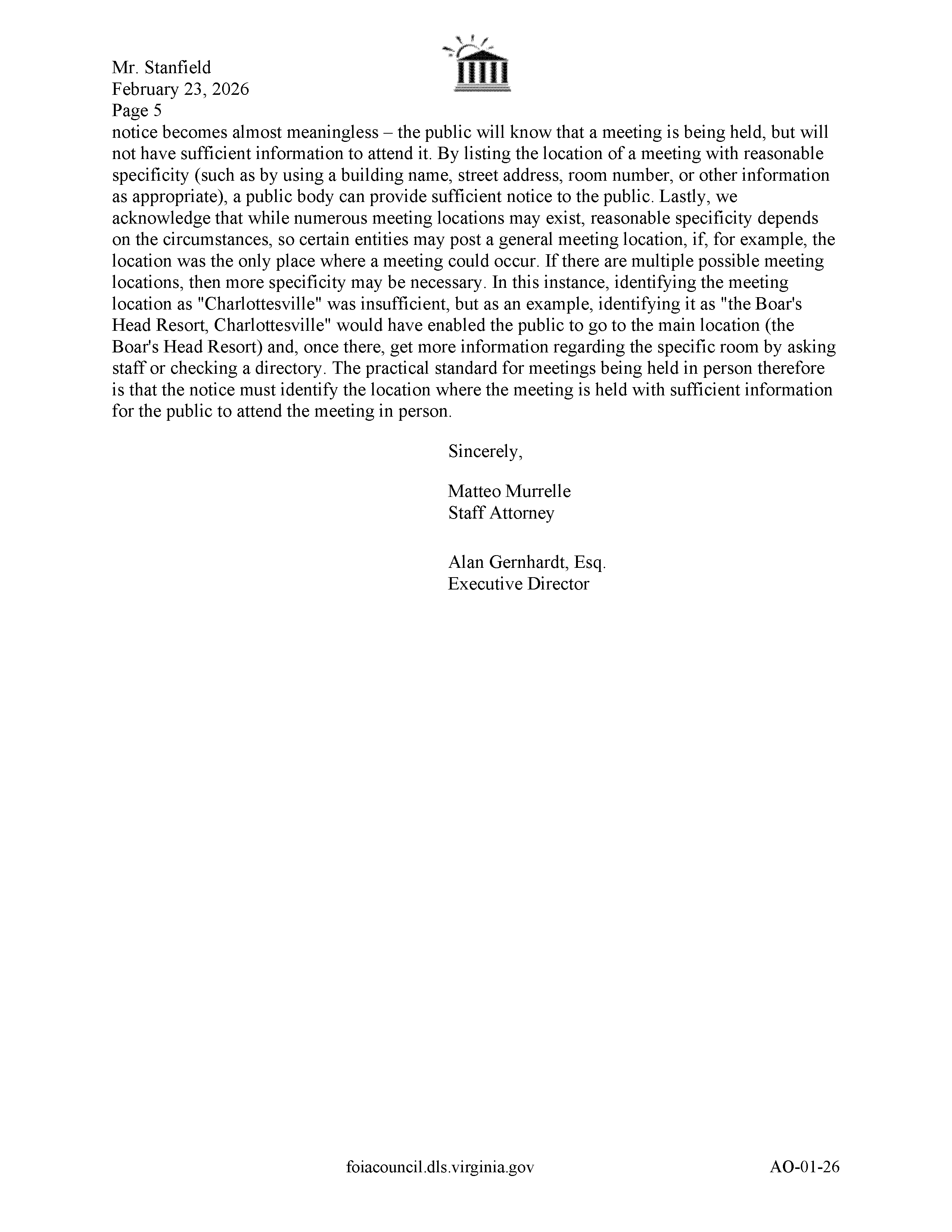
As you highlighted in your initial correspondence with this office, the public body in question listed only the locality where the meeting was taking place. The degree of specificity in this instance is clearly insufficient to provide an open invitation, because listing only the city does not provide enough information for a citizen to attend the meeting. In light of FOIA's policy statement found in subsection B of § 2.2-3700 of the Code of Virginia, if citizens of the Commonwealth cannot reasonably locate a meeting based on the meeting's public notice, the notice becomes almost meaningless – the public will know that a meeting is being held, but will not have sufficient information to attend it. By listing the location of a meeting with reasonable specificity (such as by using a building name, street address, room number, or other information as appropriate), a public body can provide sufficient notice to the public. Lastly, we acknowledge that while numerous meeting locations may exist, reasonable specificity depends on the circumstances, so certain entities may post a general meeting location, if, for example, the location was the only place where a meeting could occur. If there are multiple possible meeting locations, then more specificity may be necessary. In this instance, identifying the meeting location as "Charlottesville" was insufficient, but as an example, identifying it as "the Boar's Head Resort, Charlottesville" would have enabled the public to go to the main location (the Boar's Head Resort) and, once there, get more information regarding the specific room by asking staff or checking a directory. The practical standard for meetings being held in person therefore is that the notice must identify the location where the meeting is held with sufficient information for the public to attend the meeting in person.
You can download the opinion, which appears on the Council’s website, here:

Thank you, Josh!!! 👏👏👏